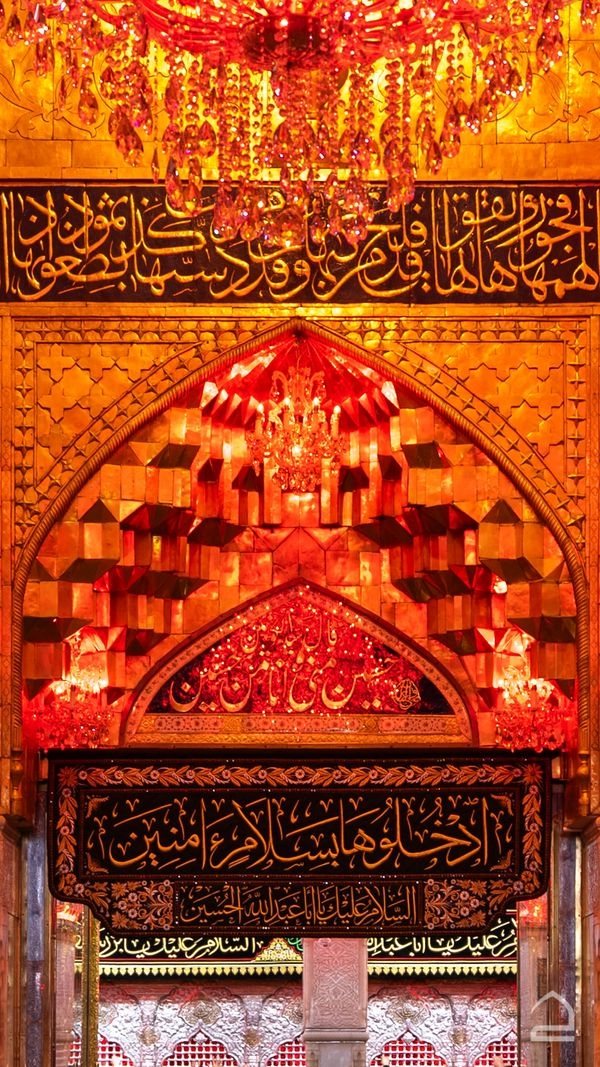
Iraq · Karbala · Imam Husayn Shrine
Ziyarat Ashura
Full Ziyarat Ashura in Arabic with English translation, audio and printable PDFs. Recited any day, especially on the day of Ashura.
10–15 min58 linesAny time · especially on Ashura★ 4.3 · 565 ratings
Next Ashura: Tuesday, 15 June 2027 — a calculated date (Umm al-Qura); a local moonsighting can move it by a day. About the day
Download this ziyarah as a PDF · Download the Urdu PDF (اردو)
- 1
السَّلاَمُ عَلَيْكَ يَا أَبَا عَبْدِ اللَّهِ
Assalaamo alayka yaa Abaa Abdillaah
Peace be on you, O Aba Abdillah!
سلام ہو آپ پر اے ابو عبد الله الحسین
- 2
السَّلاَمُ عَلَيْكَ يَا ابْنَ رَسُولِ اللَّهِ
Assalaamo alayka Yabna Rasoolillaah
Peace be on you, O son of the Messenger of Allah!
سلام ہو آپ پر اے فرزند رسول خدا
- 3
السَّلاَمُ عَلَيْكَ يَا ابْنَ أَمِيرِ الْمُؤْمِنِينَ وَ ابْنَ سَيِّدِ الْوَصِيِّينَ
Assalaamo alayka yabna Ameeril Momineena wabna Sayyedil Wasiyyeen
Peace be on you, O son of the commander of the faithfuls, the forebear of the successors!
سلام ہو آپ پر اے فرزند امیر المومنین (ع)اور اے فرزند سردار اوصیاء کے
- 4
السَّلاَمُ عَلَيْكَ يَا ابْنَ فَاطِمَةَ سَيِّدَةِ نِسَاءِ الْعَالَمِينَ
Assalaamo alayka yabna Faatemaata Sayyedate Nesaa il Aalameena
Peace be on you, O son of Faatimah, the leader of the women of the worlds!
سلام ہو آپ پر اے فرزند فاطمہ زہرا (ع) جو سردار ہیں تمام خواتین عالم کی،
- 5
السَّلاَمُ عَلَيْكَ يَا ثَارَ اللَّهِ وَ ابْنَ ثَارِهِ وَ الْوِتْرَ الْمَوْتُورَ
Assalaamo alayka yaa Saarallaahe wabna Saarehee wal Witral Mawtoora
Peace be on you, who was martyred while fighting heroically in the cause of Allah, the son of Allahs fearless warrior, you were isolated and had been attacked with a vengeance!
سلام ہو آپ پر اے وہ بزرگوار جس کے خون کا طالب خدا ہے اور فرزند بھی اسکے جسکے خون کا طالب خدا ہے اور جو مظلوم اور مصیبت زدہ ہوا
- 6
السَّلاَمُ عَلَيْكَ وَ عَلَى الْأَرْوَاحِ الَّتِي حَلَّتْ بِفِنَائِكَ عَلَيْكُمْ مِنِّي جَمِيعاً سَلاَمُ اللَّهِ أَبَداً مَا بَقِيتُ وَ بَقِيَ اللَّيْلُ وَ النَّهَارُ
Assalaamo alayka wa alal arwaahil latee hallat be fenaa-eka alaykum minnee jamee-an salaamul laahe abadan maa baqeeto wa baqeyal laylo wan nahaaro
Peace be on you and on those souls who had gathered in your camp, in your journey. I pray and invoke Allah to keep all of you tranquil and restful, for ever; so far I am alive, this is my prayer, and till nights and days follow each other.
سلام ہو آپ پر اور ان روحوں پر جو اتریں آپ کے مبارک صحن میں ! آپ سب حضرات پر میری جانب سے سلام خدا ہو ہمیشہ جب تک کہ میں زندہ رہوں اور رات دن باقی رہیں!
- 7
يَا أَبَا عَبْدِ اللَّهِ لَقَدْ عَظُمَتِ الرَّزِيَّةُ وَ جَلَّتْ وَ عَظُمَتِ الْمُصِيبَةُ بِكَ (بِكُمْ) عَلَيْنَا وَ عَلَى جَمِيعِ أَهْلِ الْإِسْلاَمِ
Yaa abaa Abdillaahe laqad azomatir raziyyato wa jallat wa azomatil moseebato beka alaynaa wa alaa jamie ahlil islaame wa jallat wa azomat moseebatoka fis samaawaate alaa jamee-e ahlis samaawaate
O Abaa Abdu I lah ! unbearable is the sorrow, nerve-racking is the agony, you put up with, for us and for all the (true) Muslims,
اے ابو عبد الله الحسین (ع) بتحقیق کہ بہت عظیم ہوئی بلا آپ کی اور بہت سخت ہوئی مصیبت آپ کی، ہم پر اور تمام اہل اسلام پر
- 8
وَ جَلَّتْ وَ عَظُمَتْ مُصِيبَتُكَ فِي السَّمَاوَاتِ عَلَى جَمِيعِ أَهْلِ السَّمَاوَاتِ
Crimes committed against you also shocked and unnerved the dwellers of the heavens, one and all.
اور بہت عظیم ہوئی مصیبت آپ کی آسمانوں میں اور تمام اہل آسمان پر
- 9
فَلَعَنَ اللَّهُ أُمَّةً أَسَّسَتْ أَسَاسَ الظُّلْمِ وَ الْجَوْرِ عَلَيْكُمْ أَهْلَ الْبَيْتِ
May Allah condemn and damn the people who laid the basis and set up the groundwork, to wander astray and turn aside from not only you and your family but to take liberties and bear hard upon you.
پس لعنت کرے خدا اس گروہ پر جس نے سنگ بنیاد قائم کی ظلم و جور کی آپ اہلبیت پر
- 10
وَ لَعَنَ اللَّهُ أُمَّةً دَفَعَتْكُمْ عَنْ مَقَامِكُمْ وَ أَزَالَتْكُمْ عَنْ مَرَاتِبِكُمُ الَّتِي رَتَّبَكُمُ اللَّهُ فِيهَا
May Allah condemn and damn the people who tried to obscure and deny your office and status, wilfully neglected your rank and class Allah had made known in clear terms.
اور لعنت کرے خدا اس گروہ پر جس نے آپ حضرات کو آپ حضرات کے مقام سے ہٹایا اور دور کرنا چاہا آپ حضرات کو ان مراتب سے جن کو خدا نے آپ حضرات کے لئے ثابت کیا ہے
- 11
وَ لَعَنَ اللَّهُ أُمَّةً قَتَلَتْكُمْ وَ لَعَنَ اللَّهُ الْمُمَهِّدِينَ لَهُمْ بِالتَّمْكِينِ مِنْ قِتَالِكُمْ
May Allah condemn and damn the people who killed you. May Allah condemn and damn the abettors who instigated and had a part in your murder.
اور لعنت کرے خدا اس گروہ پر جس نے آپ کو قتل کیا اور لعنت کرے خدا اس گروہ پر جنہوں نے اسباب مہییا کئے آپ کے قتل پر قادر ہونے کی
- 12
بَرِئْتُ إِلَى اللَّهِ وَ إِلَيْكُمْ مِنْهُمْ وَ (مِنْ) أَشْيَاعِهِمْ وَ أَتْبَاعِهِمْ وَ أَوْلِيَائِهِمْ
I turn to you and Allah, away from them, their henchmen, their followers and their friends,
بریت چاھتا ہوں میں خدا کے ذریعے سے اور آپ کے ذریعے ان لوگوں سے اور ان کی پیروی کرنے والوں سے اور ان کی تابعداری کرنے والوں سے اور ان کے دوستوں سے!
- 13
يَا أَبَا عَبْدِ اللَّهِ إِنِّي سِلْمٌ لِمَنْ سَالَمَكُمْ وَ حَرْبٌ لِمَنْ حَارَبَكُمْ إِلَى يَوْمِ الْقِيَامَةِ
O Abaa Abdullah, I make peace with those who make their peace with you, I make war on those who go to war against you, till the Day of Judgement.
اے مولا میرے اے ابو عبد الله الحسین (ع) میں صلح کرنے والا ہوں ہر اس شخص سے جو آپ سے صلح کرے اور جنگ کرنے والا ہوں ہر اس شخص سے جو آپ سے جنگ کرے روز قیامت تک
- 14
وَ لَعَنَ اللَّهُ آلَ زِيَادٍ وَ آلَ مَرْوَانَ وَ لَعَنَ اللَّهُ بَنِي أُمَيَّةَ قَاطِبَةً وَ لَعَنَ اللَّهُ ابْنَ مَرْجَانَةَ
May Allah condemn and damn the family of Ziyaad and the family of Marwaan; may Allah condemn and damn the group and the tribe of Umiyyah, one and all, altogether;may Allah condemn and damn ibna Marjaanah;
اور لعنت کرے خدا اولاد زیاد اور آل مروان پر اور لعنت کرے خدا تمام بنی امیہ پر اور لعنت کرے خدا پسر مرجانہ پر
- 15
´وَ لَعَنَ اللَّهُ عُمَرَ بْنَ سَعْدٍ وَ لَعَنَ اللَّهُ شِمْراً
May Allah condemn and damn Umar bin Saad; may Allah condemn and damn Shimr;
اور لعنت کرے خدا عمر بن سعد پر اور لعنت کرے خدا شمر پر
- 16
وَ لَعَنَ اللَّهُ أُمَّةً أَسْرَجَتْ وَ أَلْجَمَتْ وَ تَنَقَّبَتْ لِقِتَالِكَ بِأَبِي أَنْتَ وَ أُمِّي
May Allah condemn and damn the people who celebrate, enjoy, sing and dance on the day of your martyrdom. My father and mother are at your disposal.
اور لعنت کرے خدا اس گروہ پر جس نے زین اپنی سواریوں پر رکھا اور نجام لگائی اور نقاب باندھی اور قصد کیا آپ کے قتل کرنے کا، میرے ماں باپ آپ پر فدا ہوں
- 17
لَقَدْ عَظُمَ مُصَابِي بِكَ فَأَسْأَلُ اللَّهَ الَّذِي أَكْرَمَ مَقَامَكَ وَ أَكْرَمَنِي بِكَ
Profound is my sorrow for you. I beg Allah, who honoured you above others, to be generous towards me on account of you,
بہ تحقیق کہ شدید ہوئی مصیبت مجھ پر آپ کے قتل کی وجہ سے پاس میں سوال کرتا ہوں خدا سے جس نے بزرگ کیا آپ کے مقام کو اور عزت دی مجھ کو آپ کے سبب سے
- 18
أَنْ يَرْزُقَنِي طَلَبَ ثَارِكَ مَعَ إِمَامٍ مَنْصُورٍ مِنْ أَهْلِ بَيْتِ مُحَمَّدٍ صَلَّى اللَّهُ عَلَيْهِ وَ آلِهِ
and give me the opportunity to be with the victorious Imaam, the descendant of Muhammad (blessings and peace be on him and on his children from Allah) at the time of the final and decisive war against Allahs enemies.
کہ نصیب کرے مجھ کو طلب کرنا حق آپکے خون کا اس امام کے ساتھ جو منصور ہے اور اہلبیت مصطفیٰ (ص) سے ہے، صلوات بھیجے خدا ان پر اور ان کی آل پر
- 19
اللَّهُمَّ اجْعَلْنِي عِنْدَكَ وَجِيهاً بِالْحُسَيْنِ عليه السلام فِي الدُّنْيَا وَ الْآخِرَةِ
O my Allah make me attend to Thy cause, sincerely, in every respect following in Husayns footsteps, in this world and the hereafter.
خدا وندا قرار دے تو مجھے اپنے نزدیک سرخروئی حضرت امام حسین علیھ السلام کے ساتھ دنیا و آخرت میں،
- 20
يَا أَبَا عَبْدِ اللَّهِ إِنِّي أَتَقَرَّبُ إِلَى اللَّهِ وَ إِلَى رَسُولِهِ وَ إِلَى أَمِيرِ الْمُؤْمِنِينَ
O Abaa Abdullah, I come nearer and seek greater intimacy with Allah, with His Messenger, with Ameerul Moomineen,
اے ابو عبد الله الحسین (ع) میں تقرب چاھتا ہوں بارگاہ خدا اور رسول خدا (ص) اور حضرت امیر المومنین (ع)
- 21
وَ إِلَى فَاطِمَةَ وَ إِلَى الْحَسَنِ وَ إِلَيْكَ بِمُوَالاَتِكَ
with Faatimah, with Hasan and with you, with the help of your love
اور حضرت فاطمہ زہرا (ع) اور حضرت امام حسن (ع) اور آپ کی جناب میں آپ کی محبّت کے سبب سے
- 22
وَ بِالْبَرَاءَةِ (مِمَّنْ قَاتَلَكَ وَ نَصَبَ لَكَ الْحَرْبَ وَ بِالْبَرَاءَةِ مِمَّنْ أَسَّسَ أَسَاسَ الظُّلْمِ وَ الْجَوْرِ عَلَيْكُمْ
and patronage, cutting off every connection with those who took up arms against you and killed you. I disconnect all links with those who, in the beginning, took the first steps to take liberties with and bear hard upon you,
اور بیزاری سے ان لوگوں کی جنہوں نے آپ کے ساتھ قتال کیا اور قائم کیا آپ سے جنگ کو اور ان لوگوں کو بیزاری کی وجہ سے جنہوں نے قائم کیا بنیاد ظلم و ستم کو، آپ حضرات پر
- 23
وَ أَبْرَأُ إِلَى اللَّهِ وَ إِلَى رَسُولِهِ) مِمَّنْ أَسَّسَ أَسَاسَ ذَلِكَ وَ بَنَى عَلَيْهِ بُنْيَانَهُ
I take refuge with Allah and His Messenger free from the guilt of associating with those who laid the foundation for (your suffering), devised and carried out their corrupt plan of action,
اور بیزاری کرتا ہوں درگاہ خدا میں اور بارگاہ رسالتمآب میں ان لوگوں سے جنہوں نے اسکی بنیاد ڈالی اور اس کو مستحکم کرتے رہے اور قائم رہے آپ حضرات پر ظلم و ستم کرنے پر
- 24
وَ جَرَى فِي ظُلْمِهِ وَ جَوْرِهِ عَلَيْكُمْ وَ عَلَى أَشْيَاعِكُمْ بَرِئْتُ إِلَى اللَّهِ وَ إِلَيْكُمْ مِنْهُمْ
boldly gave currency to reign of terror and cruelty to oppress you and your friends and followers; detach myself from them and present myself to Allah and to you,
اور آپ حضرات کی پیروی کرنے والوں پر، بیزاری کرتا ہوں میں خدا کی طرف اور آپ کی طرف ان لوگوں سے
- 25
وَ أَتَقَرَّبُ إِلَى اللَّهِ ثُمَّ إِلَيْكُمْ بِمُوَالاَتِكُمْ وَ مُوَالاَةِ وَلِيِّكُمْ
I (first) seek greater intimacy with Allah and then with you to win your love and patronage, and to make friends with your friends,
اور تقرب چاھتا ہوں میں خدا کی طرف پھر آپ حضرت کی طرف، آپ حضرات کی دوستی سے اور آپ کے دوستوں کی دوستی سے
- 26
وَ بِالْبَرَاءَةِ مِنْ أَعْدَائِكُمْ وَ النَّاصِبِينَ لَكُمُ الْحَرْبَ وَ بِالْبَرَاءَةِ مِنْ أَشْيَاعِهِمْ وَ أَتْبَاعِهِمْ
cut off all links with your enemies, and with those who planted the seeds of hostility against you, and reject and discard their associates, their followers and their friends.
اور بیزاری سے آپ حضرات کے دشمنوں سے اور ان لوگوں سے جنہوں نے آپ حضرات سے جنگ کی اور بیزاری سے ان ا پیروی کرنے والوں سے اور ان کے اتباع کرنے والوں سے
- 27
إِنِّي سِلْمٌ لِمَنْ سَالَمَكُمْ وَ حَرْبٌ لِمَنْ حَارَبَكُمْ وَ وَلِيٌّ لِمَنْ وَالاَكُمْ وَ عَدُوٌّ لِمَنْ عَادَاكُمْ
I make peace with those who made their peace with you, I search out and confront those who waged war against you, I make friends with those who stood by you, I strive against those who came in conflict with you,
میں صلح کرنے والا ہوں ہر اس شخص سے جو آپ سے صلح کرنے والا ہو اور جنگ کرنے والا ہوں جو آپ حضرات سے جنگ کرے اور دوست ہوں اس شخص کا جو آپ حضرات کو دوست رکھے اور دشمن ہوں ہر اس شخص کا جو آپ حضرات سے دشمنی رکھے
- 28
فَأَسْأَلُ اللَّهَ الَّذِي أَكْرَمَنِي بِمَعْرِفَتِكُمْ وَ مَعْرِفَةِ أَوْلِيَائِكُمْ وَ رَزَقَنِي الْبَرَاءَةَ مِنْ أَعْدَائِكُمْ
therefore, I make a request to Allah to acquaint (me) with the awareness that perceives you and your friends, to set me free from the corrupting influence of your enemies,
پاس میں سوال کرتا ہوں اس خدا سے جس نے مجھے بزرگی عطا فرمائی آپ کی معرفت کی وجہ سے اور آپ کے دوستوں کی معرفت کی وجہ سے اور نصیب کیا بیزاری کرنا آپ کے دشمنوں سے
- 29
أَنْ يَجْعَلَنِي مَعَكُمْ فِي الدُّنْيَا وَ الْآخِرَةِ وَ أَنْ يُثَبِّتَ لِي عِنْدَكُمْ قَدَمَ صِدْقٍ فِي الدُّنْيَا وَ الْآخِرَةِ
to make me keep company with you it, this world and in the Hereafter, stand firm beside you and follow your footsteps closely in this world and in the next world.
یہ کہ قرار دے مجھ کو آپ حضرات کے ساتھ دنیا و آخرت میں اور یہ کہ ثابت قدم رکھے مجھ کو آپکی محبّت میں سچائی کے ساتھ دنیا و آخرت میں
- 30
وَ أَسْأَلُهُ أَنْ يُبَلِّغَنِي الْمَقَامَ الْمَحْمُودَ لَكُمْ عِنْدَ اللَّهِ
I beseech Him that He helps me to reach your highly praised station, given to you by Allah, (to meet you),
اور سوال کرتا ہوں میں خدا سے کہ پہنچائے مجھ کو مقام محمود میں جو آپ حضرات کے لئے خدا کے نزدیک ہے
- 31
وَ أَنْ يَرْزُقَنِي طَلَبَ ثَارِي (ثَارَكُمْ) مَعَ إِمَامٍ هُدًى (مَهْدِيٍّ) ظَاهِرٍ نَاطِقٍ بِالْحَقِّ مِنْكُمْ
that He provides me the opportunity to fight for justice and fairplay alongwith and under the leadership of the rightly guided guide (in your progeny) who surely will come and speak the truth.
اور یہ کہ خدا نصیب کرے مجھے کو طلب کرنا حق آپ کے خون کے ساتھ حضرت امام مہدی (ع) آخر الزماں کے جو ظاہر ہونے والے ہیں گویا ہونے والے ہیں حق کے ساتھ جو آپ میں سے ہیں
- 32
وَ أَسْأَلُ اللَّهَ بِحَقِّكُمْ وَ بِالشَّأْنِ الَّذِي لَكُمْ عِنْدَهُ أَنْ يُعْطِيَنِي بِمُصَابِي بِكُمْ أَفْضَلَ مَا يُعْطِي مُصَاباً بِمُصِيبَتِهِ
I beseech Allah in the name of your right and the purpose He assigned to you, that He overwhelms me with grief in memory of your sorrows, more than the personal grief that torments any one who is in great agony,
اور میں سوال کرتا ہوں میں خدا سے واسطہ دے کر آپ حضرات کا اور آپ حضرات کی اس شان کا جو اس کے نزدیک ہے یہ کہ اتا کرے اجر مجھ کو آپ کی مصیبت میں بہتر اس اجر سے جو دیگا کسی مصیبت زدہ کو اس کی مصیبت کا
- 33
مُصِيبَةً مَا أَعْظَمَهَا وَ أَعْظَمَ رَزِيَّتَهَا فِي الْإِسْلاَمِ وَ فِي جَمِيعِ السَّمَاوَاتِ وَ الْأَرْضِ (الْأَرَضِينَ)
sorrows which have no parallel and overshadow all calamities that took place in the history of Islam, for that matter, through out the whole universe.
کس قدر عظیم ہے آپ کی اور بڑی ہے بلا اس کی اسلام میں اور تمام اہل آسمانوں اور اہل زمین پر
- 34
اللَّهُمَّ اجْعَلْنِي فِي مَقَامِي هَذَا مِمَّنْ تَنَالُهُ مِنْكَ صَلَوَاتٌ وَ رَحْمَةٌ وَ مَغْفِرَةٌ
O my Allah, in my on the spot situation, treat me like him (or her) who obtains from Thee (Thy) blessings, mercy and forgiveness.
خدا وندا قرار دے مجھ کو اس مقام میں ان لوگوں سے جن کو حاصل ہوتی ہے تیری بارگاہ سے رحمت اور برکت مغفرت
- 35
اللَّهُمَّ اجْعَلْ مَحْيَايَ مَحْيَا مُحَمَّدٍ وَ آلِ مُحَمَّدٍ وَ مَمَاتِي مَمَاتَ مُحَمَّدٍ وَ آلِ مُحَمَّدٍ
O my Allah, bring me to life again, after death, in the place Muhammad and his Aal (children) are dwelling, and make me depart from this world like Muhammad and his Aal (children) had left,
خدا وندا قرار دے میری زندگی محمّد (ص) و آل محمّد (ع) کے ساتھ اور میری موت کو موت محمّد (ص) و آل محمّد (ع) کے ساتھ
- 36
اللَّهُمَّ إِنَّ هَذَا يَوْمٌ تَبَرَّكَتْ بِهِ (فِيهِ) بَنُو أُمَيَّةَ وَ ابْنُ آكِلَةِ الْأَكْبَادِ
O my Allah this day is a day of rejoicing for the Bani Umayyah,
خدا وندا یہ وہ دن ہے جب کو بنی امیہ نے برکت کا دن قرار دیا ہے
- 37
اللَّعِينُ ابْنُ اللَّعِينِ عَلَى (لِسَانِكَ) وَ لِسَانِ نَبِيِّكَ (صَلَّى اللَّهُ عَلَيْهِ وَ آلِهِ)
the herd of hardened criminals, the eternally damned and accursed group, a fact that had been made public by Thee and by Thy Prophet (blessings of Allah be on him and on his children),
اور بیٹے نے زن جگر خوارہ کے جو ملعون ہے اور بیٹا ہے ملعون کا، تیرے قول سے اور تیرے نبی (ص) کے قول سے
- 38
فِي كُلِّ مَوْطِنٍ وَ مَوْقِفٍ وَقَفَ فِيهِ نَبِيُّكَ (صَلَّى اللَّهُ عَلَيْهِ وَ آلِهِ)
who, in every place and at all occasions, drew attention of people to this truism.
صلوات خدا ہو ان کی آل پر ہر محل وقوع اور جائے قیام میں جس میں قیام کیا تیرے نبی نے صلوات خدا ہو ان پر اور انکی آل پر
- 39
اللَّهُمَّ الْعَنْ أَبَا سُفْيَانَ وَ مُعَاوِيَةَ وَ يَزِيدَ بْنَ مُعَاوِيَةَ عَلَيْهِمْ مِنْكَ اللَّعْنَةُ أَبَدَ الْآبِدِينَ
O my Allah condemn and damn Abu Sufyaan, Muawiyah bin Abu Sufyan, Yazid bin Muwawiyah and let it be an everlasting curse upon therr from Thee.
خدا وندا لعنت کر ابو سفیان پر اور معاویہ پر جو بیٹا ہے ابو سفیان کا اور یزید جو بیٹا ہے معاویہ کا اور ان سب پر تیری طرف سے لعنت ہو ہمیشہ ہمیشہ
- 40
وَ هَذَا يَوْمٌ فَرِحَتْ بِهِ آلُ زِيَادٍ وَ آلُ مَرْوَانَ بِقَتْلِهِمُ الْحُسَيْنَ صَلَوَاتُ اللَّهِ عَلَيْهِ (عَلَيْهِ السَّلاَمُ)
Today the descendants of Ziyaad and Marwan make merry, laugh and dance because on this day they killed Husayn (blessings of Allah be on him).
اور یہ وہ دن ہے کہ اس دن خوشی کی آل زیاد نے، اور آل مروان نے قتل کرنے سے امام حسین (ع) کو
- 41
اللَّهُمَّ فَضَاعِفْ عَلَيْهِمُ اللَّعْنَ مِنْكَ وَ الْعَذَابَ (الْأَلِيمَ)
O my Allah, therefore, double up the curse Thou brings upon them and also the punishment Thou decrees for them.
خدا وندا زیادہ کر ان سب پر لعنت کو اور عذاب کو
- 42
اللَّهُمَّ إِنِّي أَتَقَرَّبُ إِلَيْكَ فِي هَذَا الْيَوْمِ وَ فِي مَوْقِفِي هَذَا وَ أَيَّامِ حَيَاتِي
O my Allah, I seek nearness to Thee today in this frame of mind, cutting off all links with them for the rest of my life,
خدا وندا میں تقرب چاہتا ہوں تیری بارگاہ میں آج کے دن اور اپنے اس جائے قیام میں اور اپنے تمام ایام زندگی میں، یہ سبب بیزاری کرنے ان ملعونوں کے اور ان سب پر لعنت کرنے کی وجہ سے
- 43
بِالْبَرَاءَةِ مِنْهُمْ وَ اللَّعْنَةِ عَلَيْهِمْ وَ بِالْمُوَالاَةِ لِنَبِيِّكَ وَ آلِ نَبِيِّكَ (عَلَيْهِ وَ) عَلَيْهِمُ السَّلاَمُ
denouncing them because of my love for Thy Prophet and his children, peace be on him and them.
اور یہ سبب دوستی کے تیرے نبی کے اور تیرے نبی کی آل کے ان سب حضرات پر سلام ہو
Say 100 Times:
- 45
اللَّهُمَّ الْعَنْ أَوَّلَ ظَالِمٍ ظَلَمَ حَقَّ مُحَمَّدٍ وَ آلِ مُحَمَّدٍ وَ آخِرَ تَابِعٍ لَهُ عَلَى ذَلِكَ
O my Allah condemn and damn the first tyrant who unjustly and wrongfully usurped that which rightly belonged to Muhammad and the children of Muhammad, and bring curse upon those who, after him, followed in his footsteps.
خدا وندا لعنت کر تو پہلے ظلم کرنے والے پر جس نے چھینا حق محمّد مصطفیٰ (ص) کا اور ان کی آل کا اور آخر تک کرنے والوں پر اس کے ظلم میں،
- 46
اللَّهُمَّ الْعَنِ الْعِصَابَةَ الَّتِي (الَّذِينَ) جَاهَدَتِ الْحُسَيْنَ وَ شَايَعَتْ وَ بَايَعَتْ وَ تَابَعَتْ (تَايَعَتْ) عَلَى قَتْلِهِ اللَّهُمَّ الْعَنْهُمْ جَمِيعاً
O my Allah condemn and damn those conspirators who vexed and harassed Husayn, showed eagerness, agreed mutually, and joined hands to kill him. O my Allah bring curse upon all of them.
خدا وندا لعنت کا تو ان لوگوں پر جنہوں نے جنگ کی حضرت امام حسین (ع) سے اور پیروی کی جنگ کرنے والوں کی اور بیعت کی اور پیروی کی آنحضرت کے قتل پر، خدا وندا سبھوں پر لعنت کر
Say 100 Times:
- 48
السَّلاَمُ عَلَيْكَ يَا أَبَا عَبْدِ اللَّهِ وَ عَلَى الْأَرْوَاحِ الَّتِي حَلَّتْ بِفِنَائِكَ
Peace be on you, O Abaa Abdullah, and on those souls who came to your camp to put themselves at your disposal.
سلام ہو آپ پر اے ابو عبد الله الحسین (ع) اور ان روحوں پر جو نازل ہوئیں آپ کے صحن خانہ میں اور مقیم ہیں آپ کے روضۂ اقدس میں
- 49
عَلَيْكَ مِنِّي سَلاَمُ اللَّهِ أَبَداً مَا بَقِيتُ وَ بَقِيَ اللَّيْلُ وَ النَّهَارُ
So far I am alive and the days and nights follow each other I invoke Allah to send blessings on you for ever and ever.
میری طرف سے سلام خدا ہو ہمیشہ جب تک کہ میں زندہ ہوں اور روز و شب باقی ہیں
- 50
وَ لاَ جَعَلَهُ اللَّهُ آخِرَ الْعَهْدِ مِنِّي لِزِيَارَتِكُمْ (لِزِيَارَتِكَ)
May Allah not make my this pledge of close association, physical as well as spiritual, with you the last fulfilment.
اور قرارنہ دے خدا میری اس زیارت کو آپ کی آخری زیارت
- 51
السَّلاَمُ عَلَى الْحُسَيْنِ وَ عَلَى عَلِيِّ بْنِ الْحُسَيْنِ (وَ عَلَى أَوْلاَدِ الْحُسَيْنِ ) وَ عَلَى أَصْحَابِ الْحُسَيْنِ
Peace be on Husayn, and on Ali son of Husayn, and on the children of Husayn, and on the friends of Husayn.
سلام ہو میرے مولا امام حسین (ع) پر اور شہزادہ علی اکبر (ع) پر، پسر امام حسین (ع) پر اور جملہ اولاد امام حسین (ع) پر اور اصحاب امام حسین (ع) پر -
- 52
اللَّهُمَّ خُصَّ أَنْتَ أَوَّلَ ظَالِمٍ بِاللَّعْنِ مِنِّي وَ ابْدَأْ بِهِ أَوَّلاً ثُمَّ (الْعَنِ) الثَّانِيَ وَ الثَّالِثَ وَ الرَّابِعَ
O my Allah, let the curse I call down on the head of the first tyrant stick like a leech; and stay put for ever on the first, then the second, the third and the fourth.
خدا وندا مخصوص کر تو پہلے ظالم کو میری طرف سے لعنت کے ساتھ اور ابتداء کر پہلے اسی ظالم سے پھر دوسرے پر پھر تیسرے پر پھر چوتھے پر
- 53
اللَّهُمَّ الْعَنْ يَزِيدَ خَامِساً وَ الْعَنْ عُبَيْدَ اللَّهِ بْنَ زِيَادٍ وَ ابْنَ مَرْجَانَةَ
O my Allah damn and call down evil on the fifth, Yazid son of Muaawyah, and bring a curse upon Ubaydullah bin Ziyaad, ibna Marjanah,
خدا وندا لعنت کر تو یزید بن معاویہ ملعون پانچویں پر، اور لعنت کر عبید الله بن زیاد پر جو بیٹا ہے مرجانہ کا
- 54
وَ عُمَرَ بْنَ سَعْدٍ وَ شِمْراً وَ آلَ أَبِي سُفْيَانَ وَ آلَ زِيَادٍ وَ آلَ مَرْوَانَ إِلَى يَوْمِ الْقِيَامَةِ
Umar bin Saad, and Shimr, and on the descendants of Abu Sufyaan, on the descendants of Ziyaad, on the descendants of Marwaan, till the Day of Judgement.
اور عمر بن سعد پر اور شمر ملعون پر اور اولاد ابو سفیان پر اور آل زیاد پر اور آل مروان پر اور تمام بنی امیہ پر تا قیامت-
And then say in Sajdah
- 56
اللَّهُمَّ لَكَ الْحَمْدُ حَمْدَ الشَّاكِرِينَ لَكَ عَلَى مُصَابِهِمْ الْحَمْدُ لِلَّهِ عَلَى عَظِيمِ رَزِيَّتِي
O my Allah! (All) praise is for Thee (alone); praise of the Ever-thankful to Thee, who glorify Thee whatever come to pass. (All) praise is for Allah for my deepfelt intense grief.
خدا وندا سب تعریفیں تیرے ہی لئے ہیں اور ان شکر کرنے والوں کی جنہوں نے تیری حمد کی اپنی مصیبت پر
- 57
اللَّهُمَّ ارْزُقْنِي شَفَاعَةَ الْحُسَيْنِ يَوْمَ الْوُرُودِ
O my Allah make available for me the recommendations of Husayn on the day I present myself before Thee,
تمام تعریفیں خدا ہی کے لئے ہیں مجھ کو شفاعت حضرت امام حسین (ع) کی قیامت کے دن
- 58
وَ ثَبِّتْ لِي قَدَمَ صِدْقٍ عِنْدَكَ مَعَ الْحُسَيْنِ وَ أَصْحَابِ الْحُسَيْنِ الَّذِينَ بَذَلُوا مُهَجَهُمْ دُونَ الْحُسَيْنِ عليه السلام
let me stand firm in safety before Thee on account of my sincere attachment with Husayn, alongwith him and his comrades, who sacrificed everything they had (heart, mind, soul and life) for Husayn, peace be on him
ثابت قدم رکھ سچائی پر مجھ کو اپنے نزدیک ہمراہ امام حسین (ع) اور اصحاب آنحضرت کے جنہوں نے اپنی جانیں دے دیں حضرت امام حسین (ع) کے سامنے ان کی نصرت میں
What is Ziyarat Ashura?
Ziyarat Ashura is the ziyarah of Imam Husayn (a.s.), named for the day of Ashura — the tenth of Muharram, the anniversary of his martyrdom at Karbala in 61 AH. Its text is preserved in the classical ziyarah collections — Kamil al-Ziyarat of Ibn Qulawayh and Shaykh al-Tusi's Misbah al-Mutahajjid — and it is carried in Mafatih al-Jinan, the book of devotions.
When is Ziyarat Ashura recited?
It may be recited on any day of the year, and the faithful are encouraged to recite it every day — traditionally after the Fajr prayer — with special emphasis on the day of Ashura itself and on Fridays. A well-known devotion is to recite it for forty consecutive days, a practice associated with narrations about the martyrs of Karbala.
What the text contains
The ziyarah opens with greetings of peace to Imam Husayn and the martyrs of Karbala, entrusts their affair to Allah, and dissociates from the Imam's killers and from those who approved of their deed. That dissociation is sealed by the hundred-fold refrain Allahumma la'n qatalata al-Husayn — 'O Allah, curse the killers of al-Husayn' — repeated one hundred times, and the recitation closes with prayers upon his loyal companions and upon those who remained faithful to him.
After the ziyarah
The recitation is followed by a two-rak'ah prayer of ziyarah and then the Dua of Alqama — the supplication of Alqama ibn Muhammad al-Hadrami, taught by Imam Ja'far al-Sadiq (a.s.), in which one pleads for one's needs through the right of the Prophet (s.a.w.) and his pure family.
Recited wherever you are
You need not be standing at the shrine: Ziyarat Ashura is the ziyarah of those far from Karbala as much as of pilgrims who reach it, recited as if addressing the Imam directly. It is the anchor recitation of the Muharram season for believers who cannot travel, and the same text is recited in gatherings around the world on the day of Ashura.
Commentary: Muhammad Qomi Far
Tafsir Ziyarat Ashura
Shaykh Masa al-Islam Nuri (may Allah have mercy on him) said — as quoted in Mafatih al-Jinan — that as for Ziyarat Ashura, its virtue and rank are such that it is not of the same class as the other ziyarats, which appear to be composed and dictated by the Infallibles themselves, although nothing ever left their pure hearts but what had reached them from the world above. Rather, it is of the class of the hadith qudsi, carried in this very manner — ziyarah, curse, salam and supplication — from the Lord of majesty to Jibril the trustworthy, and from him to the Seal of the Prophets (s). And by experience, perseverance in it for forty days — or even less — is without equal for the settling of needs, the attaining of aims and the repelling of enemies.
What follows reads the ziyarah passage by passage: what each salam, each curse and each petition is doing, and what the reciter declares by uttering it.
«السلام عليك يا ابا عبدالله»
The opening passage of Ziyarat Ashura is a litany of salams. By greeting Imam Husayn (a.s.) — beyond paying him respect, humility and lowliness — the visitor declares the camp to which they belong: the company of the seekers of truth, the front of Husayn, and states the conviction that is the very content of the salam.
Peace on Husayn, son of the Messenger of Allah, of Ali al-Murtaza and of Zahra the purest — the great leaders of the order of divine unity and the perfect human beings — and then on the blood whose vengeance Allah has taken upon Himself, and on the son of the one whose blood Allah will demand.
Understanding the word thar (blood, blood-vengeance) in this ziyarah and in the other supplications proclaims the most prominent historical and social fronting: the visitor declares the Imam's inheritance to be the proof of Allah on earth, the leader of the great order of divine unity, the heir of the messengers and the bearers and heralds of the order of tawhid.
"Peace on the one slaughtered, whose blood has been shed": the phrase can teach us the character of his helpers and how they acted, and stand as the practical model of our life in this world — showing how one may become Husayn's helper, and how that help is carried through.
In this ziyarah we greet Husayn as the son of the Messenger of Allah, the son of the Commander of the Faithful, the son of the best of the women of the worlds — a salam not founded on family, blood or race, which have no place in Islam, but on inheritance: on his being the heir of the true, magnificent legacy of those whose divine leadership and tawhidi imamate rest on nothing but certainty, sincerity, honour, patience and purity.
Here the visitor states which side of history their conviction stands on, whose company they are among, and whose company they seek to be among.
The commentators have described this passage as the passage of affirmation (tasdiq), standing for the whole declaration of "la ilaha illa Allah": what follows recalls the event of Karbala as the greatest calamity to have befallen the visitor, all Muslims from that time to later times, even to the days ahead — and even the greatest of calamities for the inhabitants of the heavens. And it is not an ordinary affirmation, but a conviction strong enough to negate and repudiate those who took their stand against Husayn and his school.
It wants to say: you cannot hold that Husayn was right and that Yazid was right too. And no justification can be argued on behalf of Yazidi deceit and trickery without the conviction itself tilting into emptiness. That is why, as the passage of affirmation closes, the passage of negation opens alongside it.
«لقد عظمت الرزية»
Raziyya in its origin means diminution, a loss — and a calamity necessarily entails loss of property, of lives and of fruits.
In this passage the visitor recalls how wide the Imam's movement was, and stresses the greatness of the calamity for themselves and for all the people of Islam. They want to declare that their Imam's uprising was not the revolt of one man and a small band — that this calamity weighed unbearably on the angels and on the parties devoted to divine unity who hold the station of nearness to Allah, as it did on every Muslim.
«فلعن الله أمةً أسست أساس الظلم»
Yes — negation and dissociation from the people who designed and founded the edifice of oppression. And this dissociation is not aimed at the chiefs of tyranny alone: it covers everyone who refused to see your rank and station and rose to kill your children and your kin, those who prepared the ground for your killing — and not only them, but their partisans, their followers, their way and their friends.
And this chain is not confined to the age of the Messenger's son: it runs through every age and era. Wherever the cry of the wronged rises, whoever rushes to aid disbelief by any means is the object of my loathing, and I will not stand in that camp.
This declaration demands awareness and the power to discern. To curse injustice as injustice and to present myself as a seeker of the truth is to profess that I can tell the difference, that I believe in the divine order, in Allah's justice and equity, and in the resurrection — a conviction that summons me to guard and defend the faith and the order of truth, one that does not fit inside an era but continues to the Day of Judgement.
And alongside every truth and every injustice there are always people. So I, as a follower of the Imam, not only take my stand with the truth and with the seekers of truth: I am at peace with whoever is at peace with you, and my war and struggle are with whoever wages war against you.
«إني سلمٌ لمن سالمكم و حربٌ لمن حاربكم»
This passage continues the ones before it and reaffirms the same principle of divine unity, standing on the Qur'anic measure, where we read: "Muhammad is the Messenger of Allah — hard against the disbelievers, merciful among themselves" (48:29).
Here the visitor means to say that in the path of movement they have chosen the very direction that moves toward Allah — the perfection sought — and that companionship and cooperation with Husayn will continue with everyone who has taken the side of cooperation with him, while our struggle is permanent against those who opposed Husayn and the companions of Imam Husayn. In the visitor's own words: "the standing struggle of the partisans of truth against the surrenderers to falsehood continues to the Day of Resurrection."
The Qur'an, the word of revelation, speaks of this struggle in many forms and holds the believer responsible and obliged to it.
«ولعن الله آل زياد و آل مروان»
In this passage we see the same negation and repudiation — but this time the visitor points to history's concrete examples of tyranny, so as to deal with the matter more tangibly: to take the lesson from it, facing themselves, and to place their own pursuit and attachment in the way of truth and reality. Here the visitor means to show the whole chain of falsehood — from the plotters, the chiefs and the staff-ranks of disbelief, down to those who cleared the way for the forces of unbelief against the truth — and, by dissociating from them, to warn themselves: never let a day come when you are caught in one of these quagmires.
«بأبي أنت و أمي لقد عظم مصابي»
This passage truly runs along the length of the first and third passages. At the start the visitor counts themselves among the ransom — and not only themselves, but the dearest of their own, father and mother, ransomed for the wilaya of the Imam and for the greatness of his loss. Then they ask Allah for the seeking of the martyred Imam's blood-vengeance — while knowing that it is Allah Himself who has magnified Husayn's station and who will demand his blood.
So the visitor asks to be given that seeking under an Imam who is victorious and aided, from the household of Muhammad (s) — so that no weakness or stumble ever attaches to them on this tawhidi road.
The visitor asks Allah for honour and standing in His regard through the intercession and the right of Husayn (a.s.), and wills to make the foundations of their belief and conduct plain and confirmed by drawing near to Allah, to the Messenger (s), to the Commander of the Faithful (a.s.), to Fatima (s.a.) and to Hasan (a.s.) through love and allegiance to Husayn. And to carry the affirmation further, they set concrete models before themselves — cursing and dissociating from the founders of oppression — and declare their tawhidi movement and direction of pursuit, so that they may stand with those who resist tyranny.
So, having discerned truth from falsehood, the visitor announces the practical boundary of their conduct and keeps the permanent struggle before them, so that attachment and habit can never render them indifferent and unfeeling — and on that basis they declare the criteria of their friendship and their enmity.
«المقام المحمود»
After the repeated words — "I am at peace with whoever is at peace with you, at war with whoever wars against you…" — comes yet another confirmation of the chosen way and the chosen direction of life.
Here the visitor sees themselves one step further on: Allah has granted them His love, and the ma'rifa of the Imams and of the friends of the Imams has come to include them — the best orientation in life, graced to them as provision. For that grace, they ask that their loving movement in this world and the next be placed on the path of Allah's pleasure: that they hand themselves over to Him in truth, and that their sincere, honest steps stand firm and steady on the road of their true aim, which runs with the Imams.
And now, after these two great bounties — the ma'rifa of the Imams and dissociation from their enemies — they ask Allah for the maqam mahmud, the praiseworthy station, and to be made, like the Imams themselves, a seeker of the blood of Husayn (a.s.) with a guiding, manifest, truth-speaking Imam of the progeny, whose mission at its utmost is to guide, and whose great charge is the guidance of humanity.
The maqam mahmud asked of Allah is the absolute Muhammadan wilaya, and it is reached when the aim and purpose of the Prophet's mission is made plain and turned to certainty through the circle of wilaya, and faith spreads through prepared hearts — so that tyranny and rebellion can be uprooted from the breast.
The seeking of that station leads to the fortunate state and the radiant countenance we always long for; and then comes the seeking of blood-vengeance, which is the state of complete nearness to Allah — the "becoming God-like" in the mystics' phrase, at which the inheritance of thar Allah reaches a person.
This request is uttered at the height of anguish and pleading. And when the visitor asks for the best reward and recompense for this great calamity, they are in truth asking for intercession and tawassul: they see the honour, grace and confirmed standing of this family before Allah, and so they ask to attain greater nearness to the Lord of majesty through the tie of those brought near.
How precious is this recognition and this request! The lover burns in seeking union with the master, and from the burning of the heart comes a sweetness and freshness no words can describe.
The repeated confession of the enormity of the loss — the diminution that has struck the community — and of a calamity that has laid hold of all beings, all the heavens and the earth, shows the greatness of the mourned and the majesty of the rank of one who, by his own martyrdom, taught the greatest of lessons.
The visitor rises in this station into rapture, perceiving graces; and now, in the surge and burning of boundless love, they ask for the higher degrees and the greater bounties of Allah, as the following passage of the dua does.
«اللهم اجعلني في مقامي هذا»
In this passage the most gnostic of recognitions is attained, and the visitor asks to be given the fruit of mourning for Husayn (a.s.) — glad tidings to the burning hearts.
The highest of goods is a rank and standing that purifies the human being in their loving ascent toward Allah, so that they become worthy of the divine salawat as the Messenger of Allah (s) was — and now the visitor asks for a station confirmed by Allah.
This greeting is a special dhikr by which the visitor may be forgiven and make the particular mercy of Allah their own — and this is the limit of perfection: no higher good can be imagined than standing inside the circle of Allah's special mercy.
In this station the human being arrives at what it means to be Allah's khalifa, and must find their exalted place in this way — and from there ask Allah for permanence: a life and a death grown from faith and righteous action, after the model of the final Prophet (s), the one cut off from the world.
So it comes to be understood that the utmost of grace and mercy in this dua is stated line by line, with trust placed in Allah, in His Messenger (s) and in his progeny — so the visitor knows the road is hard, that a guide and leader must be carried along the way, and that the guide and companion is none other than the chosen of the prophets, the Seal of the Prophets — may Allah grant him to those who seek.
«اللهم إن هذا يوم تبركت بيه بنو أمية»
"O Allah, this is the day on which the Banu Umayya rejoiced" — the day they took as a feast — "and the son of the eater of livers." Then the ziyarah names them by the attribute of the cursed and "the accursed son of the accursed", upon your tongue and the tongue of your Prophet (s), in every place and at every station the Prophet of Allah stopped. This is the confirmation delivered from the tongue of the trusted Messenger, Muhammad ibn Abdullah (s), himself: the curse upon the people of disbelief.
The feast of the Banu Umayya points to the vow they had made — that if Husayn (a.s.) were killed they would make that day their festival, gladden their children, and fast it in thanksgiving for the catastrophe.
"The son of the one who ate livers" is Hind, the mother of Muawiya: she chewed the liver of Hamza, the sayyid of the martyrs, and for that was called akilat al-akbad — the eater of livers.
«اللهم العن أبا سفيان و معاوية و يزيد»
Then the visitor recalls the everlasting curse of Allah upon the staff-ranks of disbelief — naming them again by name — and gives the two reasons for the curse: what pearls of great price were slain that day in appearance, and how the families of Ziyad and Marwan rejoiced over that crime. So they ask Allah to increase the curse and the punishment upon them — yet another acknowledgement of how great the blow was and how deep the wound.
The visitor here knows precisely what injury has been dealt to the people of the world, and how the firm pillar and standing column of the faith of Islam was slaughtered under the forms of law — and how the propaganda of the killers was raised over it.
«اللهم إني اتقرب إليك في هذا اليوم»
Here the visitor again asks for nearness to Allah — on this day especially, Ashura, and in the position in which they stand, and through the days of their life — by dissociation from the leaders of disbelief and the curse upon them, and by love and allegiance to the Prophet and the Prophet's family.
They have come to awareness, and they trace their future — a future bound up with the love and burning of wilaya — by dissociating from the chiefs of disbelief and by friendship with the Prophet (s) and the Prophet's household.
They now know the line of tyranny and injustice for what it truly is, and have arrived at complete certainty. That is how the lover must burn: so that the fire of wilaya is never extinguished in the heart, and stands as the strength behind the whole road. Then, fully prepared, one strives in cursing the first of the tyrants who wronged Muhammad (s) and the family of Muhammad, and carries that creed to others, until tabarri is achieved. The aim of tawalli and tabarri in this ziyarah is real companionship with and following of the Ahl al-Bayt — and both pillars are declared repeatedly, in many registers of address.
«اللهم العن أول ظالم ظلم حق محمد و آل محمد»
In this passage the curse is drawn first upon the tyrant — the one who wronged the true rights of the Prophet and his family — and at the last upon the followers of the party of disbelief: we curse the small and the great among the companions, confederates and collaborators, and ask Allah to make the whole company inherit the curse.
In essence this declaration comes only after complete recognition of the people of truth and the people of falsehood; and the repetition through the ziyarah is there to guide and aid the human being — to remember Allah with gnostic ma'rifa, and to hold that as a great grace and a mighty means toward the precious rank of true humanity.
These passages give the human being a grasp of the rank of Husayn (a.s.), and acquaint them — as far as human capacity allows — with the secrets, the inner realities and the conscience of the station of purity (ismat and taharat). Then, knowing the degrees of the excellences and the high stations of imamate — its knowledge, forbearance, piety and courage — they arrive at complete certainty, and truly attain the rank of the perfection of faith (kamal al-iman) when the intention is truthful and the action sincere.
The purity of the believer's spirit and the cleanness of their heart now touch their need for wilaya and imamate and for seeking means through them, and they are drowned in their own mystical space. Now they must, by declaring the summary of their creed, leave the station of dua and carry its loving effect into the days to come. Yet they will not give up this effect: in one coherent whole, with the salam on Aba Abdillah, they repeat a short text several times over.
«السلام عليك يا ابا عبدالله» — the covenant
Peace on Aba Abdillah (a.s.) and on the blessed souls that came into his camp: the salam of Allah upon you forever, so long as I remain and night and day remain.
Beyond the request itself, the visitor asks for the covenant (ahd) that is special to the ziyarah, as a strengthening for themselves: that Allah never make this visit the last one.
In these passages ziyarah carries its deepest meaning: the visitor is asking for ma'rifa, for acquaintance, for the meeting with Allah forever. They take their stand on the intercession and the tie of their great Imam, hoping perhaps for hearts polished, breasts healed and eyes brightened.
They have not been heedless of winning the graces of the guidance of their merciful Imam, Husayn (a.s.), of Ali ibn al-Husayn, the ornament of the worshippers, and of the pure and valiant companions of the sayyid of the martyrs — such a request, that they may stand witness to how a son of Adam gives and sacrifices not in the way of a father but in the way of Allah, whom the father himself obeyed; and so they too must accept the wilaya by understanding and reflection, and be its continuer.
«اللهم خص أنت أول ظالم باللعن مني»
Though the four meant are known, there is a subtle story here. Sayyid al-Muhaqqiqin, the Third Martyr, Qadi Nurallah Shushtari, records in Majalis al-Mu'minin, under the translation of Shaykh al-Taifa Abu Muhammad ibn al-Hasan al-Tusi, that some opponents informed the Abbasid caliph that the Shaykh and his companions cursed the Companions, and that the Misbah — the manual of the devotions of the devout — bore witness to it. The caliph summoned the Shaykh and the book and demanded an explanation. The Shaykh denied the charge, and set out what was meant: the first oppressor is Qabil; the second, the one who hobbled the she-camel of Salih; the third, the killer of Yahya ibn Zakariyya; and the fourth, Ibn Muljam al-Muradi.
Here the visitor names the staff-ranks of disbelief for yet another time, dissociates from them, and calls down curse and loathing upon them as a longing.
«اللهم لك الحمد» — in sajdah
Then one must go into sajdah, and thank Allah in gratitude for the great grace of the ziyarah — for the ma'rifa and recognition of the Imams and the Infallibles, and for the chosen road — with a praise and hamd that belongs to those who truly give thanks.
At this moment, at the height of the graces received, the visitor does not forget the remembrance of this great calamity, so as to attain the high station of the Infallibles and to carry their intercession as the greatest strength in entering the world to come, and to prove their own steadfastness. They tie their purity, cleanness and honesty to the source of purity, and join Husayn (a.s.) and his companions and helpers — those who gave their blood for the beloved, the way of the martyred Imam — and bestow their final salam upon him through the blessing of that companionship: peace be upon him.
Qadam sidq here is the foot of sincerity and a history of grace: whoever walks this road, holding to true devotion and right conviction in this world and the next, is redeemed — and that redemption must be sought along the red line of martyrdom, as its continuer.
May Allah, by His kindness and generosity, make us hopeful too, provide us with pure deeds, and store them for our hereafter — by the right of Husayn (a.s.), in whose memory and mourning this deficient journal was written.
Hand-translated from the Persian
Related recitations & guides
- Dua of Alqama
Recited immediately after Ziyarat Ashura — the supplication taught by Imam al-Sadiq (a.s.).
- Ziyarat al-Nahiya
The eloquent ziyarah of Imam Husayn (a.s.) from the sacred precinct.
- Ziyarat Waritha
A beloved ziyarah of Imam Husayn (a.s.), recited in mourning gatherings through Muharram and Safar.
- Imam Husayn Shrine guide
The station-by-station ziyarah walkthrough of the shrine in Karbala.
- The day of Ashura
What the tenth of Muharram commemorates and how the day is marked.
- Ziyarat from afar
How to recite the ziyarats when you cannot travel to the shrines.