Masjid al-Hanana
Masjid al-Hanana — also called Yuhannan, and Masjid al-Ra's, 'the mosque of the head' — stands on the road between Najaf and Kufa, about 3 km north of the shrine of Imam Ali (a.s.) and 4 km south of the Great Mosque of Kufa. Two griefs give it its name: as the bier of Imam Ali (a.s.) was carried past, the column of this mosque bowed and lamented; and after Karbala the blessed head of Imam Husayn (a.s.) was set down here, and the ground cried out like a young camel that has lost her mother — while others trace the name to Hanna, an old Christian monastery that stood on the spot. A zarih in the mosque is attributed to the head: some accounts hold it was buried here, while other Shia narrations say it rested here only briefly and was at last reunited with the body in Karbala. Imam al-Sadiq (a.s.) would dismount at three places on this road — the shrine of Imam Ali (a.s.), this mosque at the place of the head, and the maqam of Imam al-Mahdi (a.j.) in Wadi al-Salam — offering salaam and prayer at each. Shaykh al-Mufid records that visiting it carries the reward of an Umrah, and Imam al-Baqir (a.s.) is reported to have said that prayer in this mosque wipes away sins. Its green dome, blue tilework and the Qur'anic inscriptions of its entrance shelter a courtyard of some 7,400 square metres, rebuilt in the Safavid period under Shah Abbas I and again in the fourteenth Islamic century, with the weeping column at its heart and a devotional well in the courtyard beside which pilgrims place their needs before Allah. It lay on the route of the captives of Karbala, and Arbaeen walkers still pass it — quieter than the Great Mosque of Kufa.
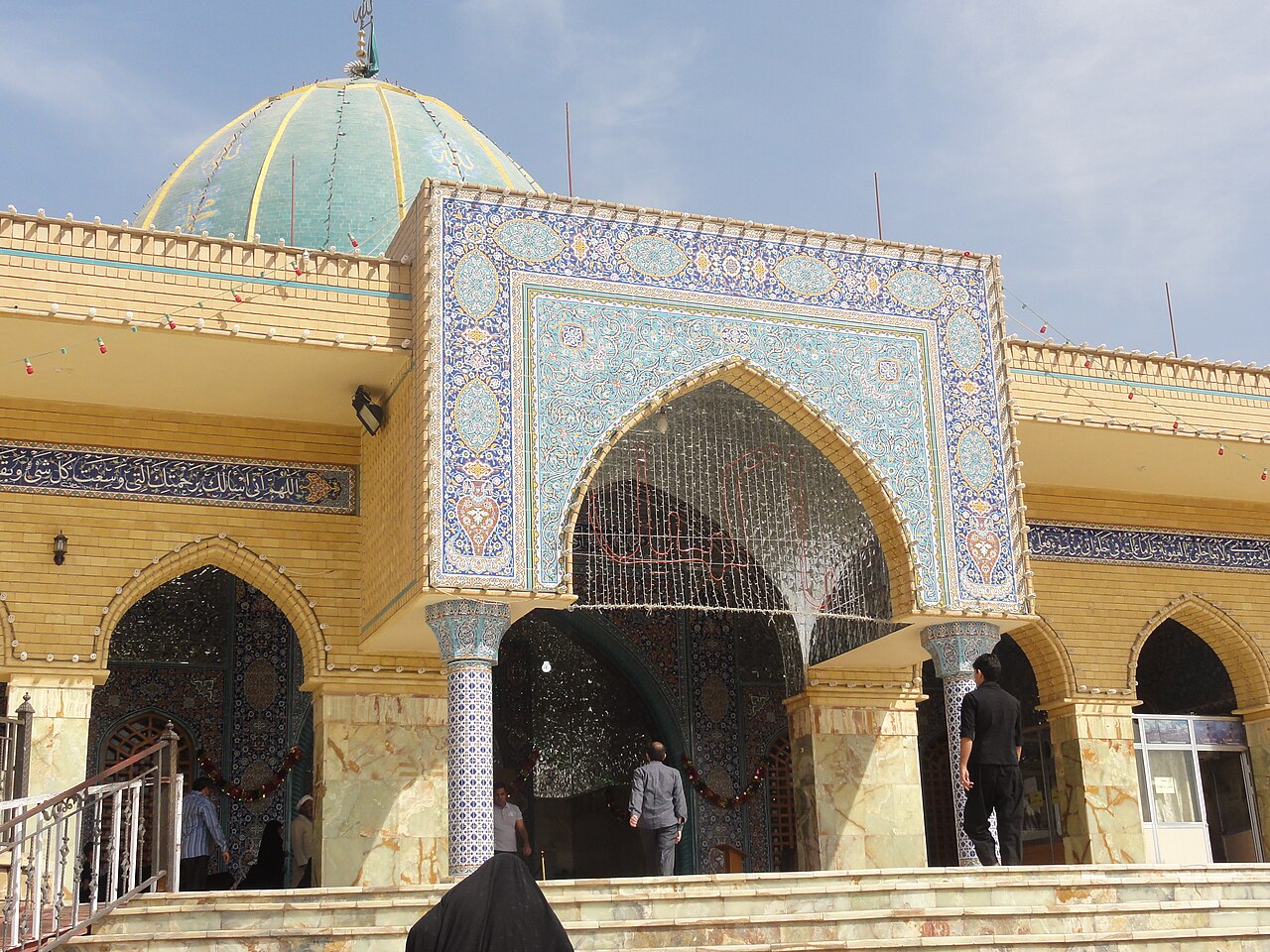
Ziyarah at this site
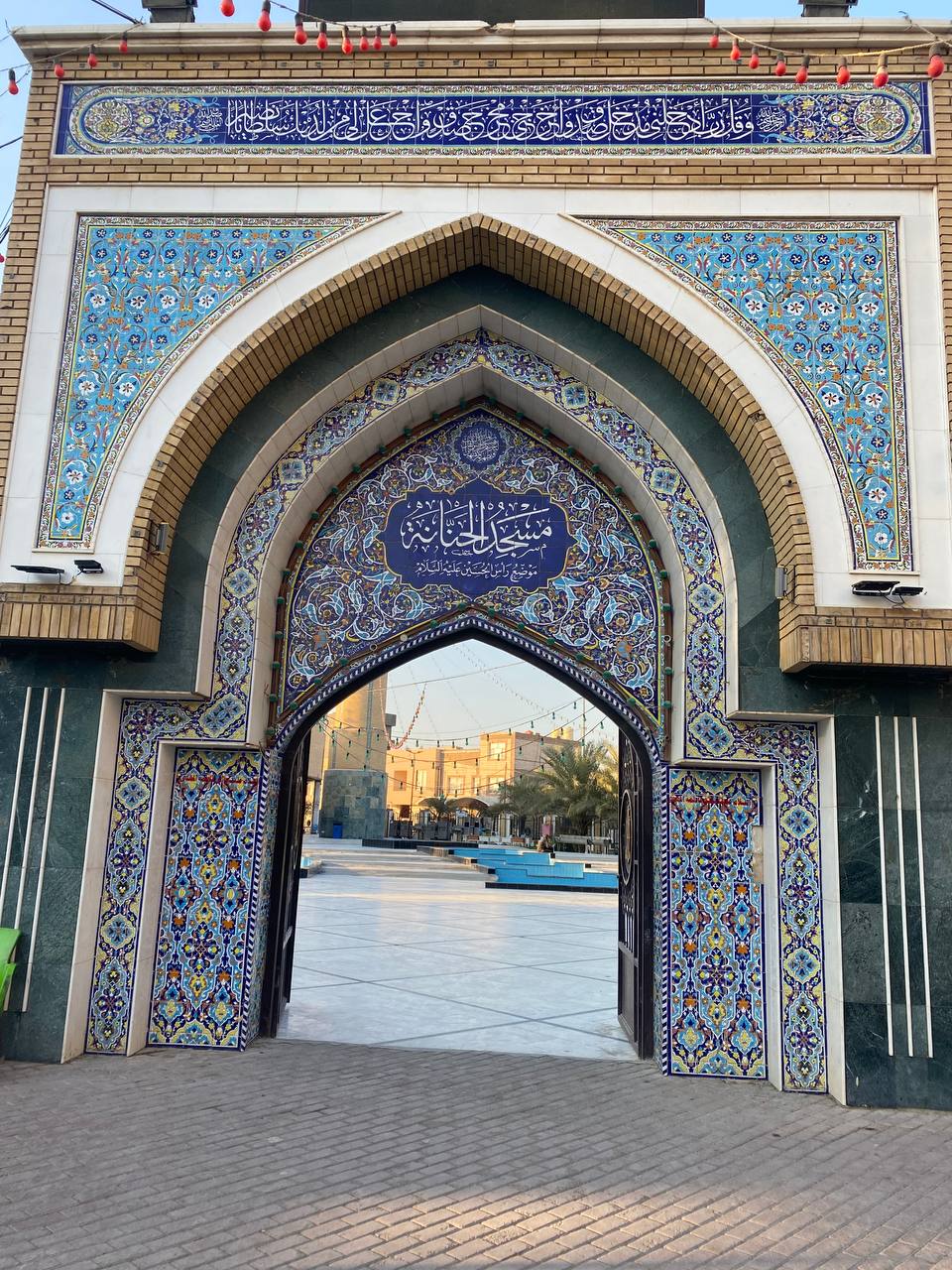
- Enter with salaam — Perform ghusl before entering, with the intention of nearness to Allah, then offer two rak'ahs of the greeting of the mosque (tahiyyat) in the courtyard — the greeting of the mosque whose column bowed for Imam Ali (a.s.) and where the head of Imam Husayn (a.s.) was set down.
- Recite the ziyarat of Imam Husayn (a.s.) — Recite the ziyarah of Imam Husayn (a.s.) at the zarih attributed to his blessed head. This is the act the dua books prescribe for the mosque that took the name Masjid al-Ra's — 'the mosque of the head' — because the head was set down here after Karbala.
- Pray the ziyarat prayer of Sayyid al-Shuhada — Offer two rak'ahs of the ziyarah prayer for the Master of Martyrs: in the first, Surah al-Hamd and Surah al-Tawhid; in the second, Surah al-Hamd and Surah al-Qadr. Then recite the tasbih of Fatima al-Zahra (s) and the supplication 'Allahumma taqabbal minna hadha al-qalil' — O Allah, accept from us this little.
- Personal dua — The devotional well in the main courtyard is attributed to Imam Ali (a.s.), who is said to have confided his sorrows to it; pilgrims hold that supplication beside it is answered quickly. Offer two rak'ahs of the prayer of need with Surah al-Hamd and Surah al-Tawhid, then recite Dua al-Tawassul beside the well or the weeping column, and close with the tasbih of Fatima al-Zahra (s).
Map location
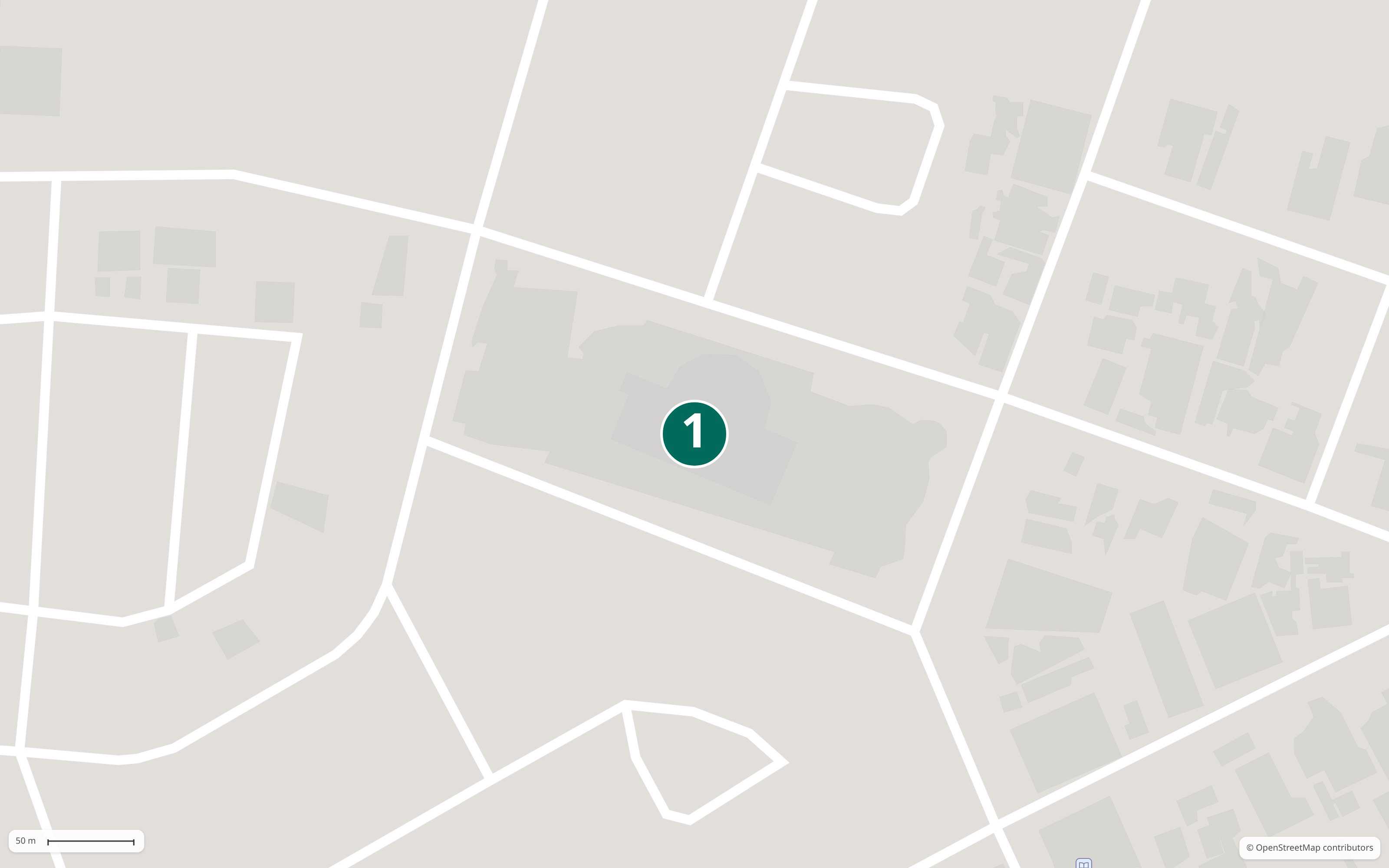
Stations on this map
- Masjid al-Hanana
Distances are straight line.