Wadi us-Salaam
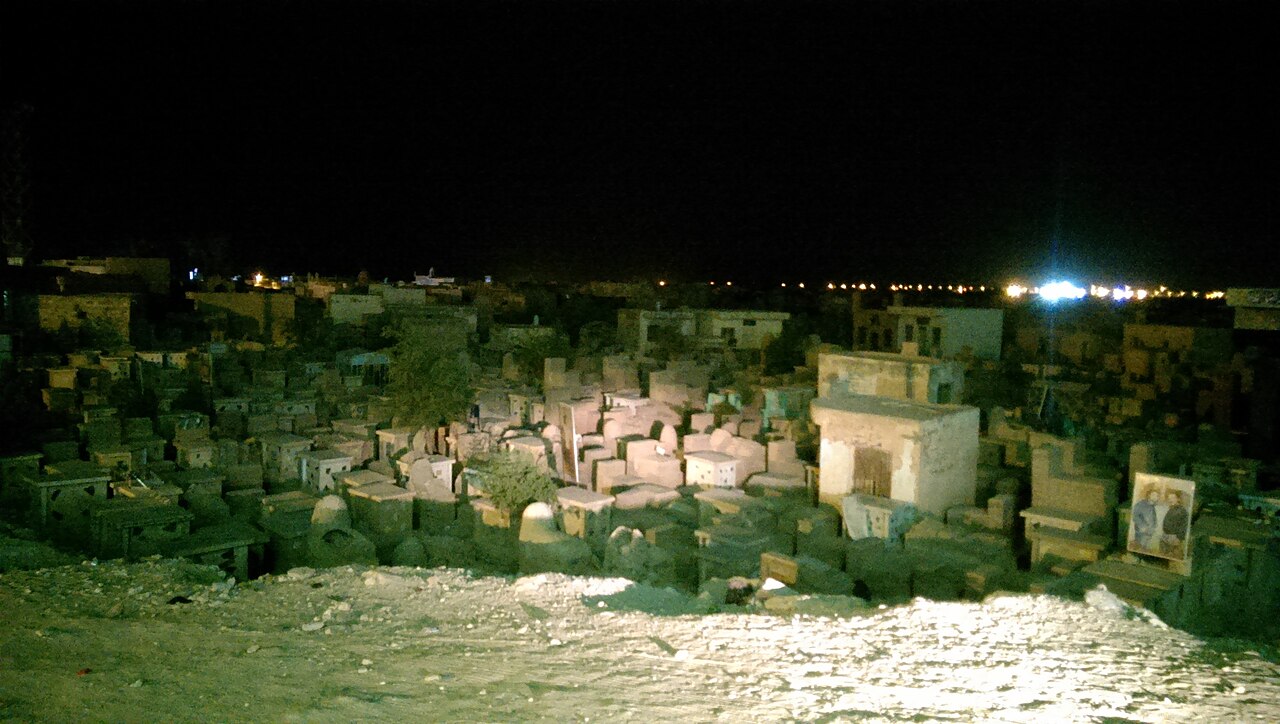
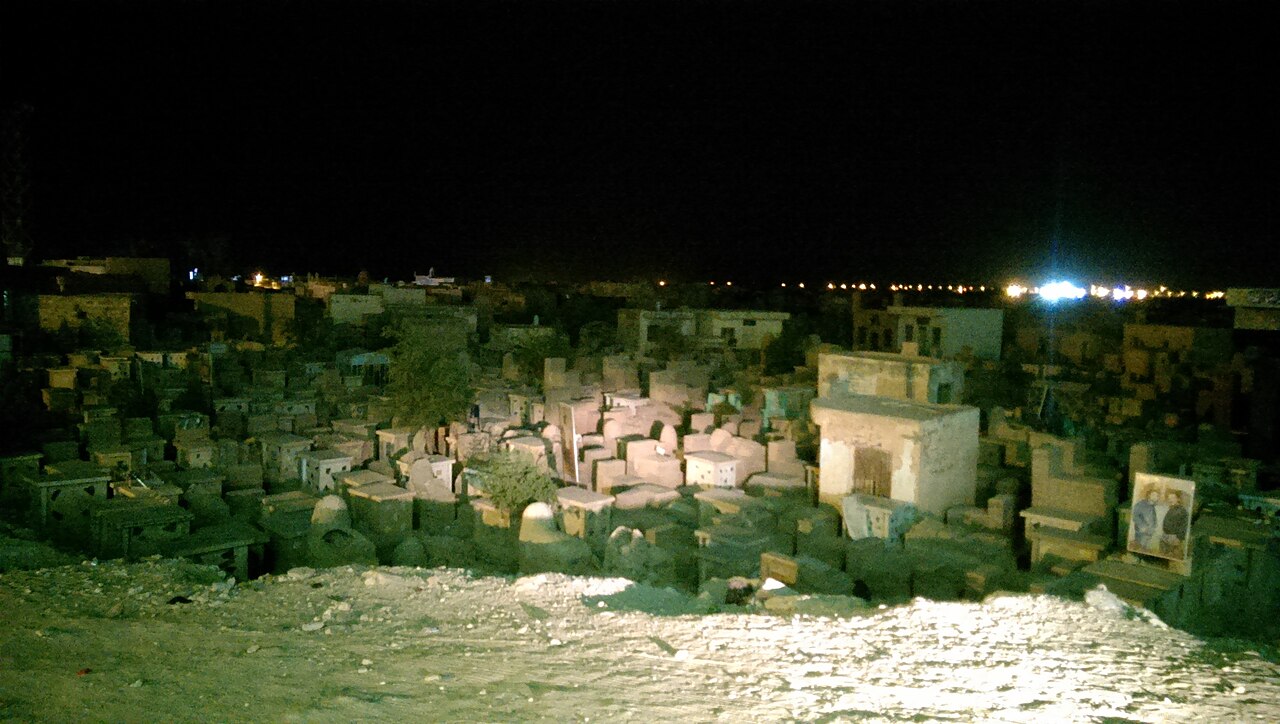
Wadi al-Salam — 'the valley of peace' — is the great cemetery of Najaf, spread across around 600 hectares north of the shrine of Imam Ali (a.s.) and holding an estimated six million graves, the largest cemetery in the world. Its oldest sections are dated to the Sasanian period, some to the Parthian, and it stands on UNESCO's tentative World Heritage list. Imam Ali (a.s.) is reported to have said that no believer dies anywhere on the earth without being told, 'Join Wadi al-Salam' — and that Wadi al-Salam is a piece of Paradise; and Imam al-Sadiq (a.s.) that the spirits of the believers of the east and the west gather here. Najaf's scholars have asked to be buried in it for centuries, and the maqams of Prophets Hud and Salih (a.s.), Imam Sajjad (a.s.) and Imam al-Mahdi (a.j.) stand within its bounds.
Ziyarah at this site
- Recite Surah al-Fatiha — Imam Ali (a.s.) is reported to have said: no believer dies anywhere on the earth without being told, 'Join Wadi al-Salam' — and Wadi al-Salam is a piece of Paradise; and Imam al-Sadiq (a.s.) that the spirits of the believers of the east and the west gather here. Recite al-Fatiha and gift its reward to those resting in this ground — the scholars, the righteous and the ordinary people of Najaf.
- Visit the maqam of Imam al-Mahdi (a.j.) and the mihrab of Imam al-Sadiq (a.s.) — The best known station of the cemetery: an old building with a blue dome holding the maqam attributed to the Imam of the Age (a.j.), the mihrab attributed to Imam al-Sadiq (a.s.), the well known as Bi'r Imam al-Mahdi (a.j.), and the stone on which the ziyarah of al-Hujjah (a.j.) is engraved. Sayyid Bahr al-Ulum raised the building, and it has been restored since. Offer salaam, pray two rak'ahs and make your supplication here.
- Visit the maqam of Imam Sajjad (a.s.) — About a kilometre west of the shrine of Imam Ali (a.s.), close to Bahr al-Najaf, stands a domed mosque with tiled walls whose mihrab is attributed to the place where Imam Zayn al-Abidin (a.s.) worshipped during his time in Najaf. The building is traced to the Safavid period and has been repaired and rebuilt several times.
- Visit the maqams of Prophets Hud and Salih (a.s.) — Stations attributed to the two prophets sent to 'Ad and Thamud, both named in the Qur'an. Shia sources place their burial in Najaf, within the bounds of Wadi al-Salam; the structure marks a maqam — a station — rather than a verified grave, since the sources differ on the exact burial place. Offer salaam and recite what you know of their stories.
- Visit the graves of the scholars and the righteous — Najaf's scholars asked to be buried in this ground beside the shrine of Imam Ali (a.s.). Among the graves pilgrims seek: Sayyid Ali Agha Qadi, the teacher of ethics and irfan whose students shaped the Najaf hawza; Sayyid Muhammad Mahdi Bahr al-Ulum, the twelfth-century AH scholar; Allama Abd al-Husayn al-Amini, author of al-Ghadir; the martyred Sayyid Muhammad Baqir al-Sadr, author of Iqtisaduna and Falsafatuna; Shaykh Muhammad Husayn Kashif al-Ghita; Ayatollah Sayyid Abu al-Qasim al-Khoei; and Rais Ali Delvari, the Iranian resistance figure of the Constitutional era. The cemetery is vast and the graves are scattered — ask a custodian for directions.
- Ziyarah of the inmates of the graves — The general ziyarah for the believers buried in any graveyard — a salutation upon those who lived and died on “There is no god save Allah”, a plea that they be forgiven, and a prayer to be raised among them on the last day. Recited when visiting a cemetery, such as Wadi us-Salaam in Najaf or Bab al-Saghir in Damascus.